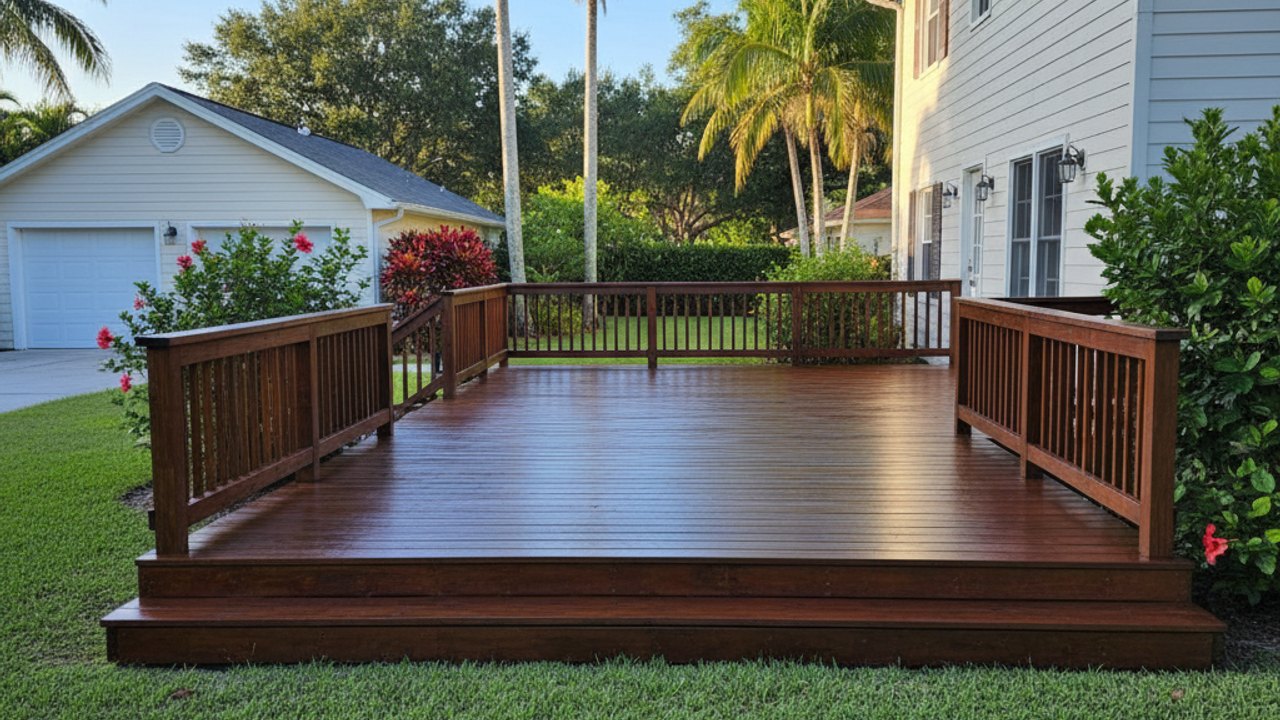
Brandon gets a lot of deck quotes in the spring, right before everybody wants to be outside for the summer. That's also when you get the widest range of bids, from a guy with a truck and a Saturday to a licensed contractor who pulls a permit and calls for an inspection. Telling those two apart before you sign anything is most of the job.
Ask about the permit before you ask about the price
Any deck attached to your house, and most freestanding ones over 30 inches off the ground, need a permit through Hillsborough County if you're in unincorporated Brandon, which most of it is. That permit is what gets your footings, your ledger attachment, and your framing checked by someone who isn't getting paid by you. A builder who tells you permits are a waste of time and money is telling you they don't want an inspector looking at their work. That's the whole tell right there. Ask who pulls the permit, ask for the permit number once it's issued, and don't pay a final draw until the final inspection has passed.
If your neighborhood has an HOA, and a lot of the newer ones around FishHawk, Lithia, and Riverview do, you'll also need architectural approval before the county permit even gets submitted in some cases. A builder who's done work in your subdivision before will already know the setback rules and what the HOA wants to see on the drawing. That saves you weeks.
What the footings actually have to survive
Most of Brandon sits on sandy soil that drains fast, which is good news for a deck. You don't get the frost heave problems builders up north deal with, because we don't get a hard freeze that goes deep enough to matter. What you do get is a high water table in a lot of low-lying yards, especially anywhere near a retention pond or a drainage easement. A footing that's poured too shallow, or one where the hole wasn't checked for standing water before the concrete went in, can settle over a few years. County code generally wants footings below a minimum frost-free depth and sized to the load, but the honest answer is the depth needed here is more about soil bearing capacity than freeze protection. A builder who digs the hole, looks at it, and just pours without checking it's dry and undisturbed is cutting a corner you won't see until the deck starts to rack.
The ledger board is where decks actually fail
If you want to know whether a builder knows what they're doing, ask how they're attaching the ledger board to the house. This is the board bolted to your rim joist that the whole deck hangs off of, and it's the number one place decks fail, nationally and here. It needs to be through-bolted or lag-screwed into the framing, not just nailed, and it needs proper flashing behind it so water doesn't get trapped between the ledger and the house siding. In our climate, with the humidity we carry from June through September and the afternoon thunderstorms that show up almost daily in summer, a poorly flashed ledger rots the rim joist behind it within a few years and you don't find out until the deck starts to pull away from the house. Ask to see how they flash it. If the answer is vague, keep asking.
Wood or composite, and what our humidity does to either one
Pressure-treated pine is still the cheaper option and it holds up fine here if it's stained and sealed on a schedule, roughly every two to three years depending on sun exposure. Left unsealed, Florida humidity and afternoon rain will grey it and start soft spots within five or six years, faster on the south and west-facing boards that get the most sun. Composite decking costs more up front but doesn't need staining, and it handles our humidity and the occasional standing puddle from a hard rain better than wood does. What it doesn't forgive is bad ventilation underneath. Composite still needs airflow under the deck to keep moisture from sitting in the joist bays, so a builder who treats composite as maintenance-free and skips proper under-deck venting is setting you up for joist rot you can't see from the top.
One more thing worth asking about regardless of material: fastener spacing and hidden fastener systems versus face-screwing. Hidden fasteners look cleaner but cost more labor to install correctly, and a rushed job with them can mean boards that lift in high wind. We're in a hurricane zone. June through November, everything on your deck, from the railing posts to the joist hangers, needs hardware rated for wind uplift, not just whatever was cheapest at the box store that week.
What a lowball bid usually leaves out
If one quote comes in noticeably lower than the others, ask what's different, not just what's cheaper. Common places bids get trimmed: smaller footing diameter than the span calls for, joist spacing stretched from 16 inches to 24 inches on center to use fewer boards, no permit fee built in because they're not planning to pull one, and hardware swapped from stainless or hot-dip galvanized to plain coated screws that will rust and streak your decking within a couple of years in this humidity. None of that shows up on the contract as a line item. It shows up three years later as a soft spot in the decking or a railing post that wiggles.
A straight answer to a direct question is the best sign you're dealing with someone who's built decks in this county before, not just decks in general. Ask how many days after the footings are poured they'll frame, ask how they handle a rainy forecast mid-build, ask what the warranty actually covers versus what falls under normal wood movement. A builder who's used to Brandon's soil, our storm season, and the county's inspection process should have real answers to all of that without having to think about it.
We've built and repaired decks all over Brandon and the surrounding towns, through the sandy soil, the summer downpours, and the permit process that comes with all of it. If you want a second opinion on a bid you already have, or you're starting from scratch, Pioneer Deck Co is a good place to start.